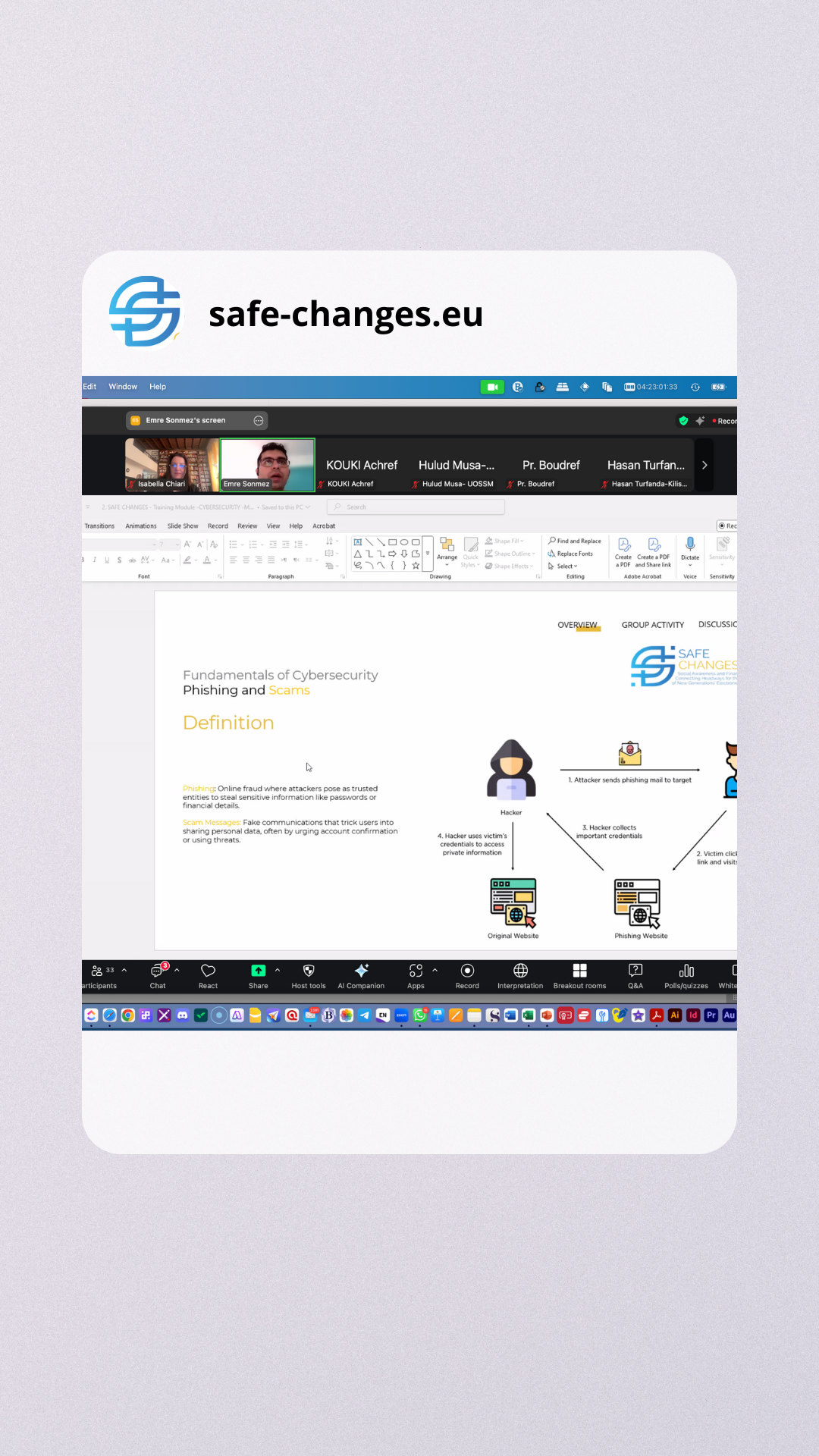
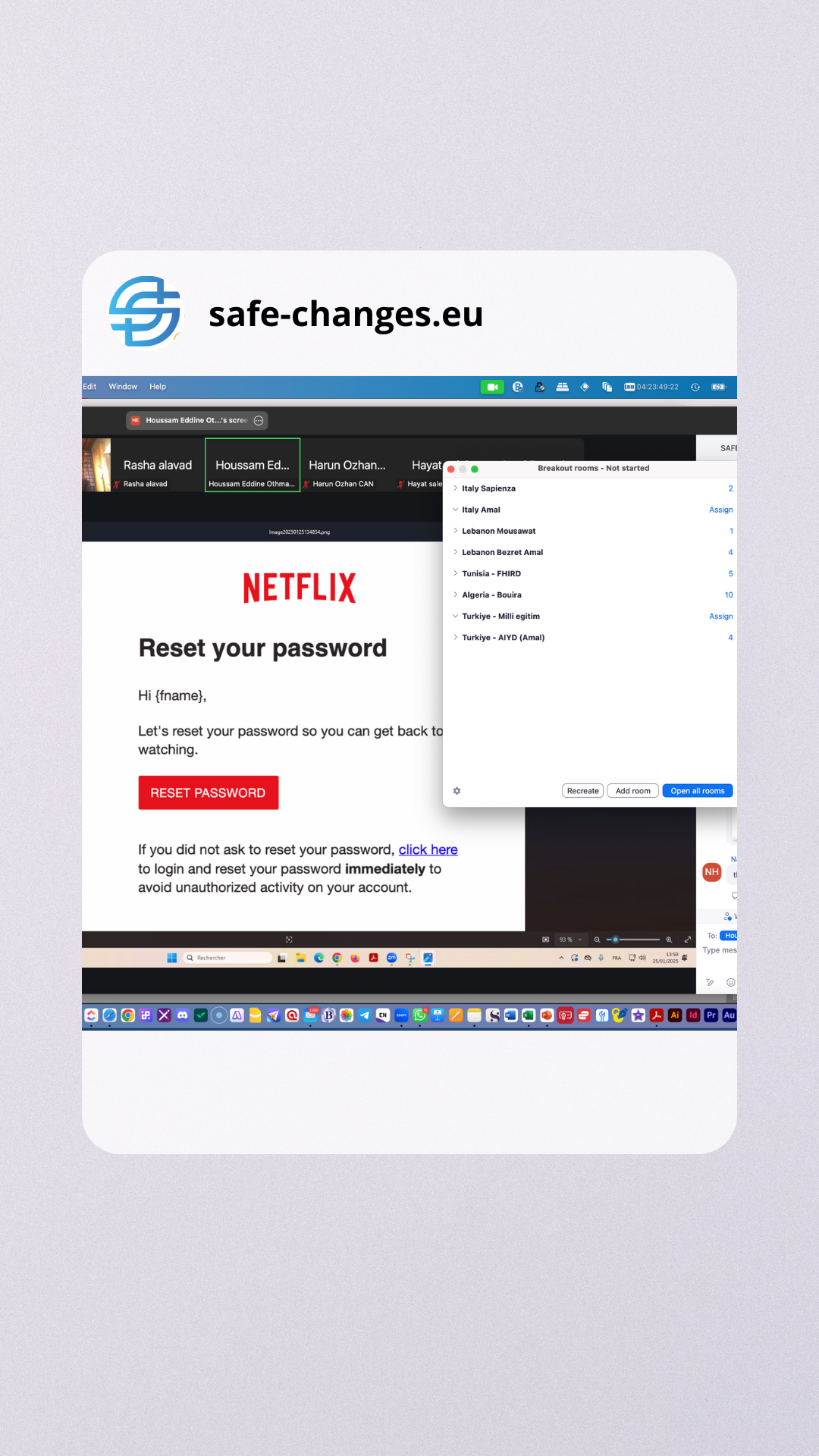
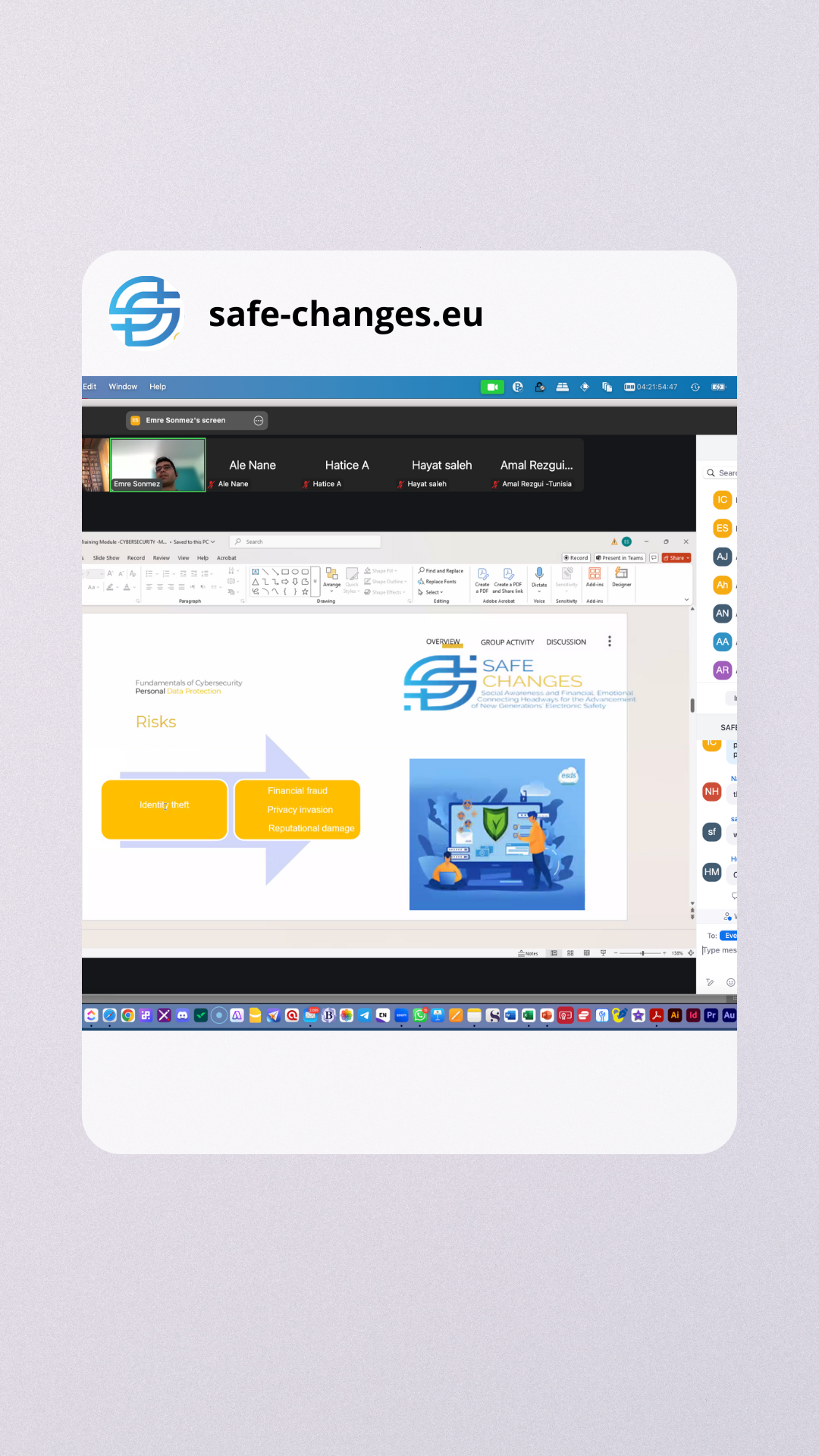
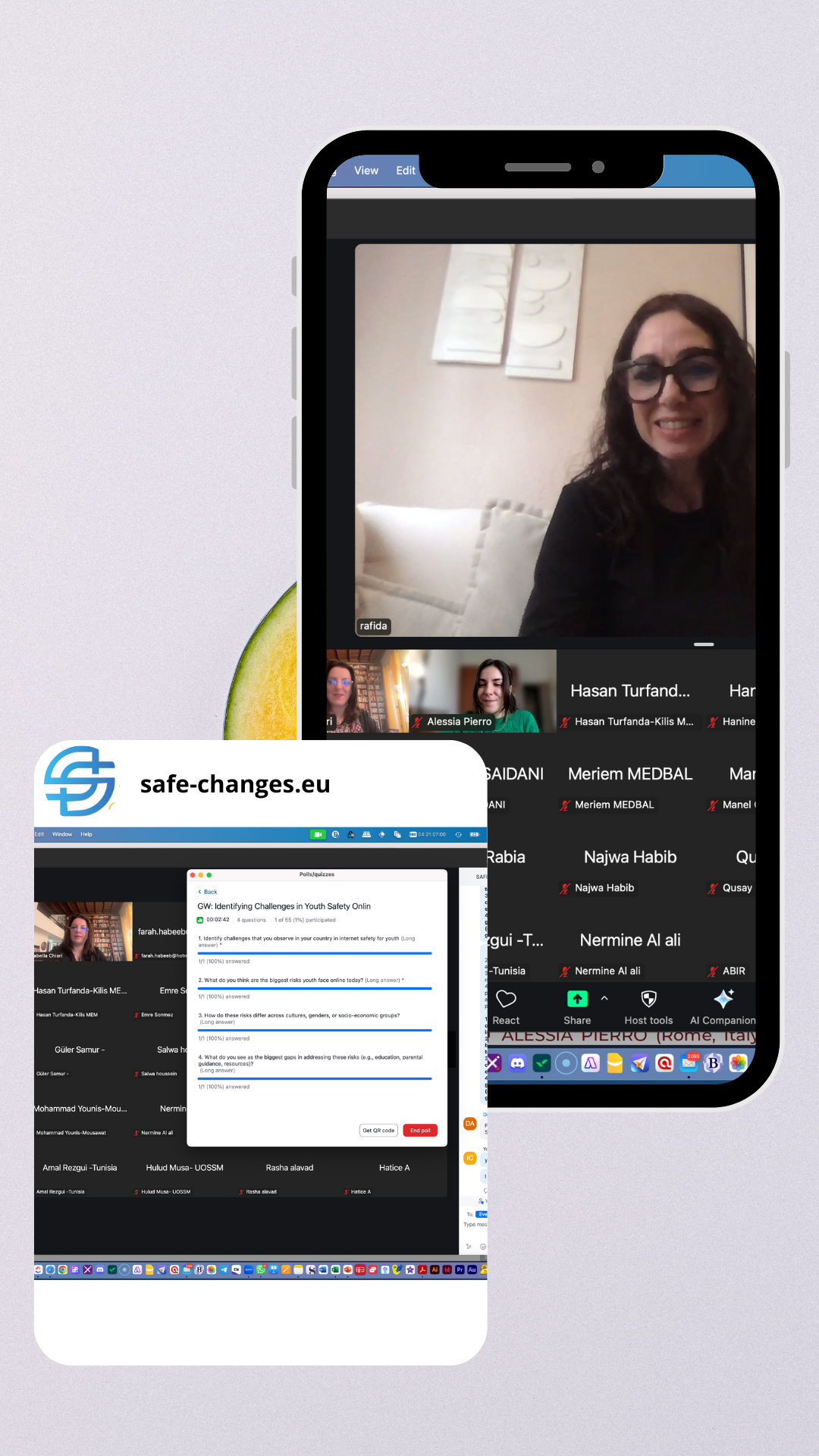
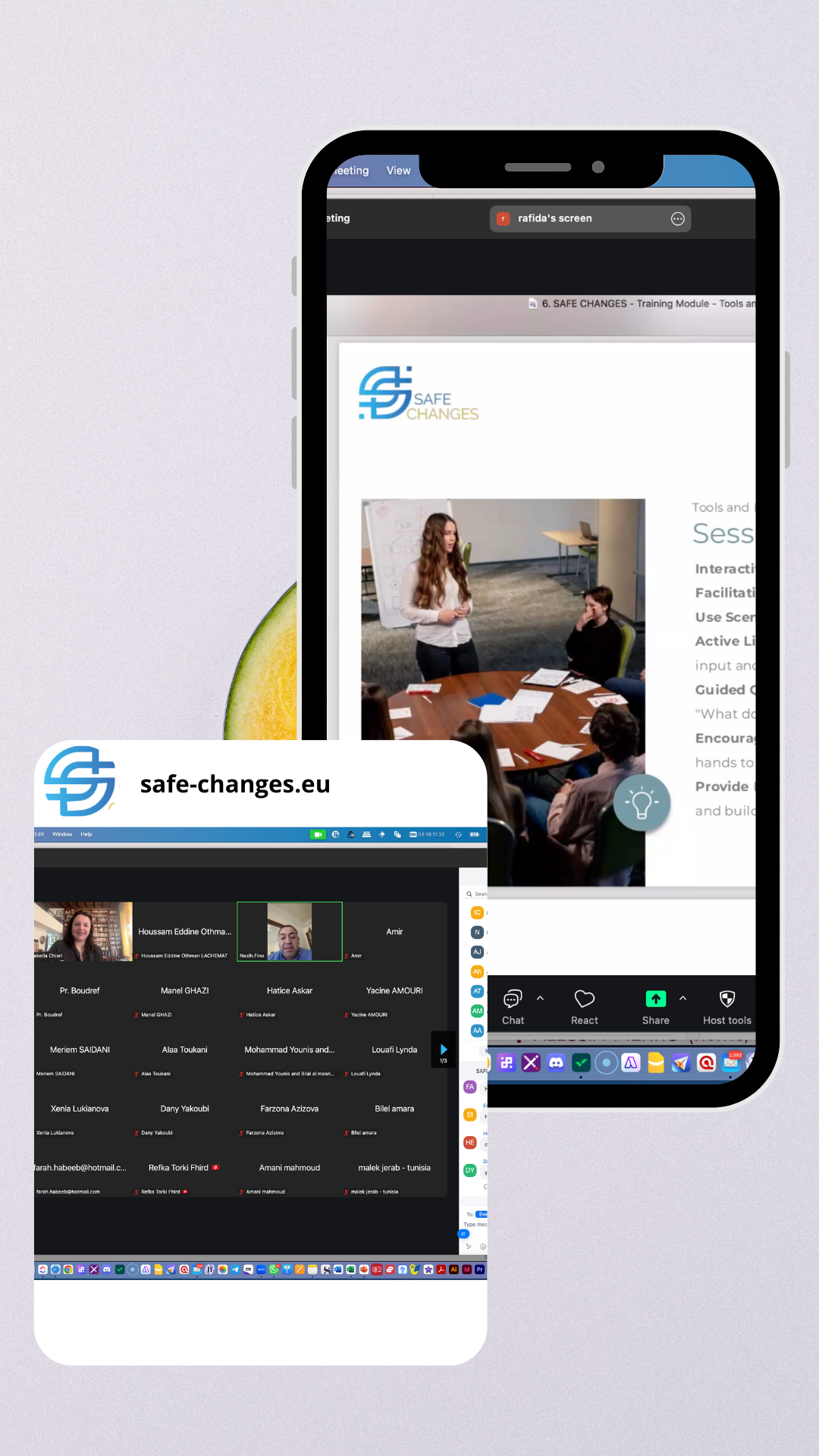
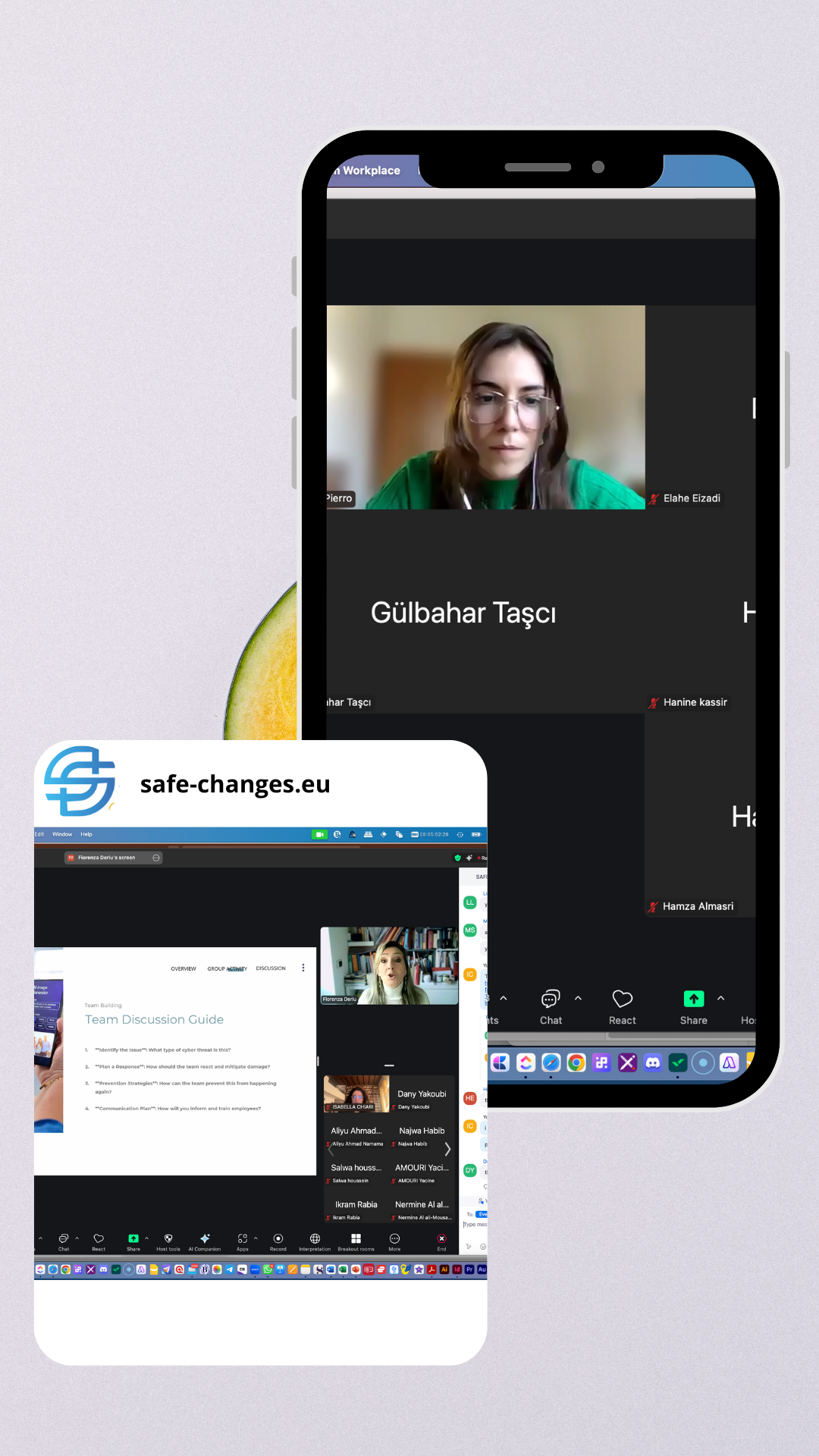
- SAFE CHANGES TRAINING #1
YOUTH WORKERS VIRTUAL EXCHANGES TRAINING
6 days, 36 hours of interactive FREE online training sessions. 25-26 January 2025, 1-2, 8-9 February 2025. 9am-3pm (Italy-Tunisia-Algeria), 10am-4pm (Lebanon), 11am-5pm (Turkiye).
- Cybersecurity & Digital Awareness
- Internet Addiction and Youth Wellbeing
- Social Risks and Online Behavior
- Information Reliability & Fact-Checking
- Leadership, Communication & Team Building
- Creative Problem-Solving & Stress Management

- PARTICIPANTS
An overview of the trainees
The first cycle of the SAFE CHANGES Online Training of Trainers brought together 95 participants from a wide range of countries, exceeding the initial target of 80. The group showed a balanced gender distribution—51 women and 44 men—and represented a rich mix of nationalities and backgrounds. While most participants currently reside in Türkiye, Lebanon, Italy, Tunisia, and Algeria, their countries of origin include Tunisia, Syria, Algeria, Lebanon, Türkiye, as well as Iran, Uzbekistan, Ukraine, Nigeria, and Palestine. The average age was 29.9, with the majority of participants falling between 23 and 36 years old, highlighting the program’s engagement with young professionals and youth workers.
Participants were referred by a network of partner organizations, with notable contributions from the University of Bouira (Algeria) and FHIRD (Tunisia), each referring 17 participants. Sapienza University in Italy followed with 16, and both Amal Insani Yardim Dernegi (Türkiye) and Bezret Amal (Lebanon) referred 14 each. The diversity of affiliations and backgrounds contributed to a dynamic, multicultural training environment.

- POST-TRAINING EVALUATION
What they learned
The post-training evaluation test consisted of 20 multiple-choice questions, each directly linked to the modules presented during the SAFE CHANGES Online Training of Trainers. The questions assessed participants’ understanding of the training’s core themes: cybersecurity, social risks, internet addiction, and information trustfulness. Each question provided four possible answers, with one correct option. The purpose of the test was to measure learning outcomes and evaluate how effectively the training reinforced key concepts, rather than to assess individual performance.
The results demonstrated a consistently high level of comprehension: 35% of the questions were answered correctly by 100% of participants, another 35% by 96.67%, 15% by 93.33%, and 15% by 90% of participants. Overall, the post-training scores reflected strong performance across the group: out of 30 respondents, 56.67% achieved a perfect score of 100, 23.33% scored 95, 10% scored 90, and 10% scored 85, confirming that the majority of participants had successfully absorbed the training content.

- PARTICIPANT's FEEDBACK
How did they appreciate it?
The SAFE CHANGES First Training of Trainers online program received highly positive feedback across all main areas of evaluation (event content, organisation, event result, event general assessment). Regarding content, 57.89% of participants strongly agreed (rating 5) that the event content was relevant, while 34.21% agreed (rating 4). Discussions were similarly well rated (52.63% strongly agreed, 39.47% agreed), and 60.53% found the distributed materials useful and informative. The event was considered interactive and engaging by 60.53% of respondents, and 63.16% appreciated the cooperation and interaction with peers. Organisational aspects were also praised: 65.79% strongly agreed that the event was well organised, 68.42% found communication between organisers and participants highly professional, and 57.89% considered the working methods suitable. The achievement of the event’s goals was strongly recognised (52.63% strongly agreed, 44.74% agreed), while 52.63% stated that the event fully met or exceeded their expectations.
Despite these very positive results, some areas for improvement were identified. Time management received slightly lower ratings: only 28.95% strongly agreed that it was appropriate, 39.47% agreed, and 31.58% expressed more neutral or lower satisfaction (rating 3 or 2). Similarly, regarding the event length and breaks, some participants suggested shorter sessions and more frequent pauses. The virtual delivery was generally well received, with 47.37% strongly agreeing that the venue and facilities were suitable. However, some participants expressed a desire for future face-to-face interaction. Overall, 55.26% rated the entire event very good, 36.84% excellent, and 47.37% found the information provided to be of immediate use. The training was clearly effective and aligned with its objectives, with opportunities for further enhancement in session pacing and engagement formats.
Well-organized, valuable content, excellent speakers, enjoyable interactive activities.